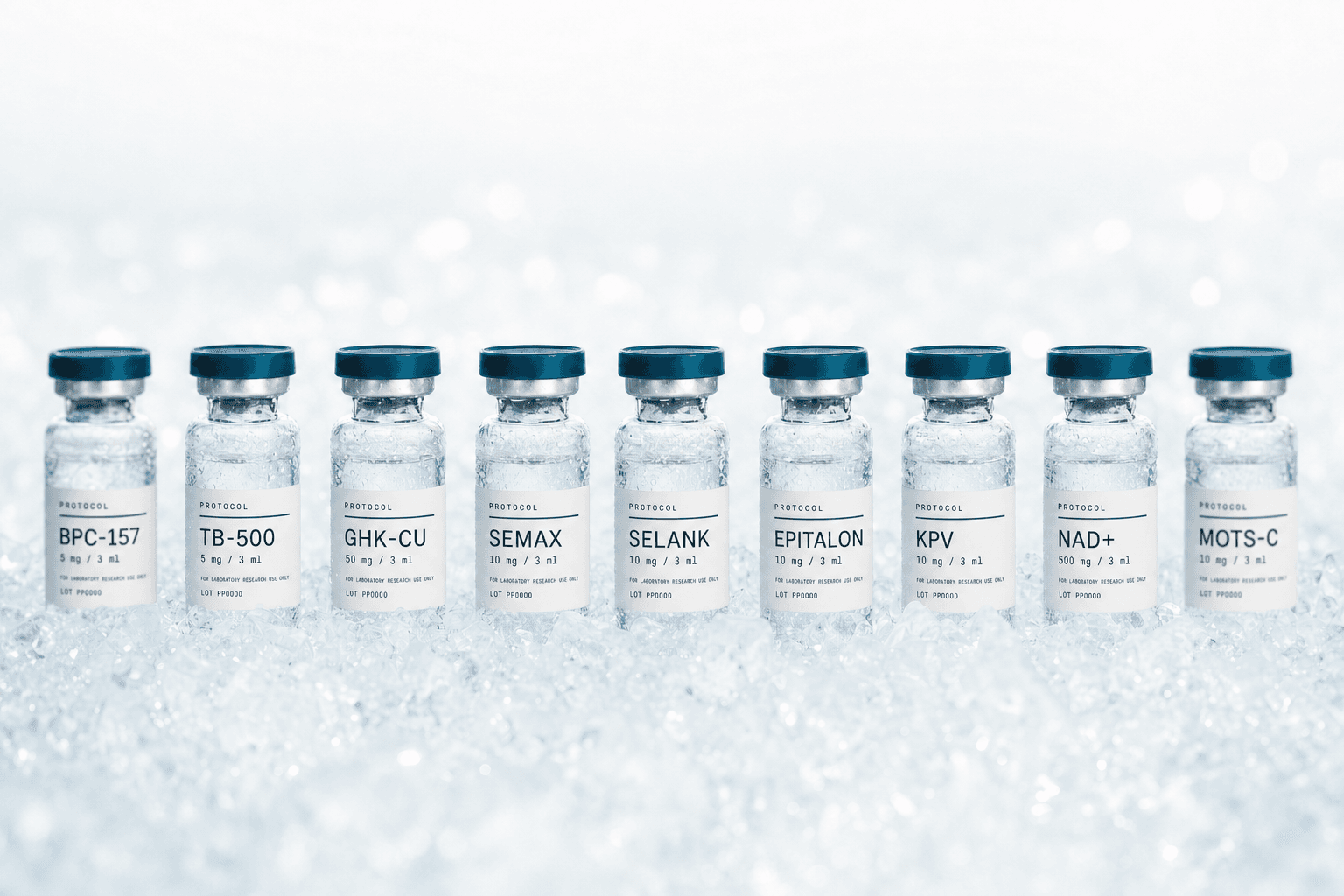
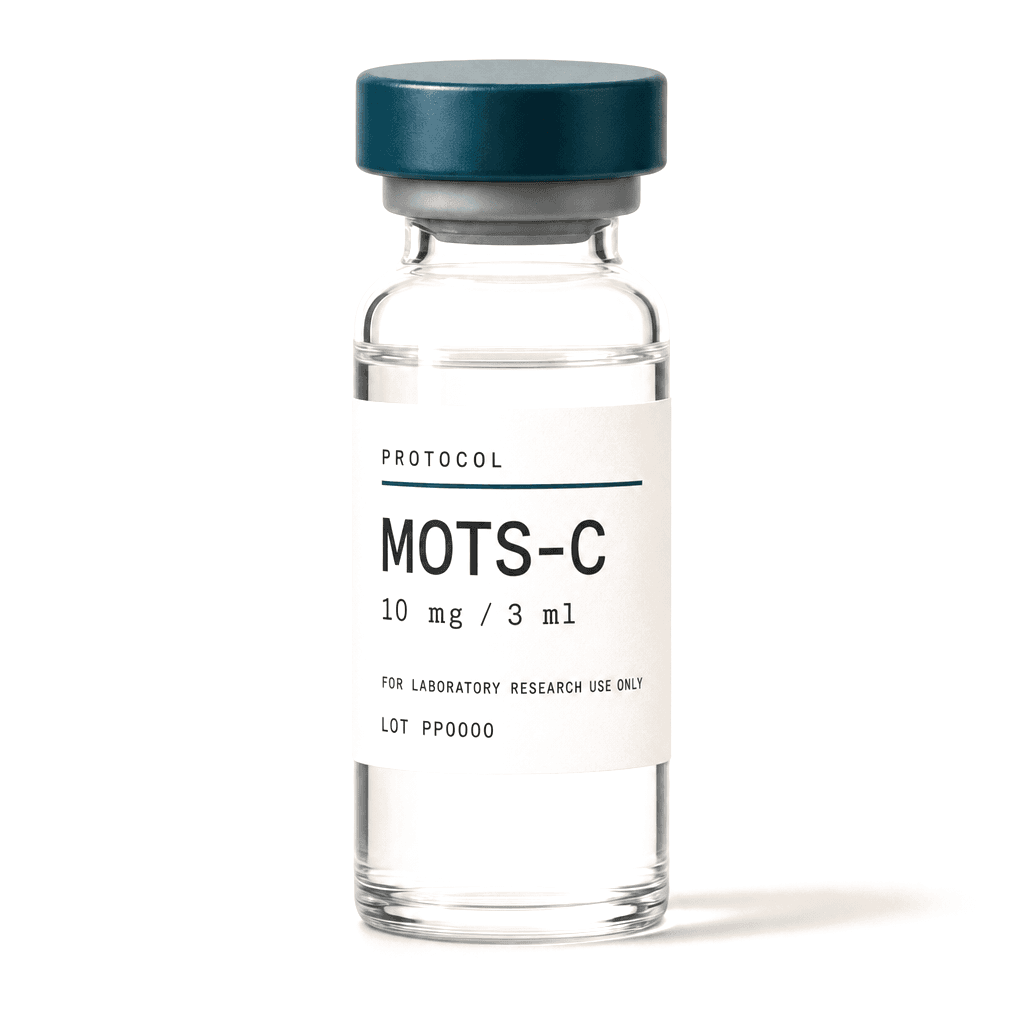
MOTS-c
Metabolic and Mitochondrial
£36.00per vial
Awaiting batch
This vial is sealed for the protection of health and hygiene. Under regulation 28(1)(e) of the Consumer Contracts (Information, Cancellation and Additional Charges) Regulations 2013, the 14-day right to cancel is lost for this item once that seal is broken. While the seal is intact the right applies in full.
MOTS-c cannot be listed to research users in Australia, Canada, Japan, Mexico, New Zealand, Norway, Russian Federation, Saudi Arabia, Singapore, South Korea, Switzerland, United Arab Emirates. Verify local eligibility before ordering.
MOTS-c is a 16-amino-acid peptide encoded not in nuclear DNA but within the mitochondrial 12S rRNA gene, one of a small set of mitochondrial-derived peptides. It is studied for AMPK activation via the folate-methionine cycle and for its stress-dependent translocation to the nucleus, in work on metabolic flexibility, mitochondrial-nuclear signalling, and skeletal muscle substrate use.
Also known as Mitochondrial ORF of the twelve S rRNA type-c.
For laboratory research only. Not for human consumption. No medical claims. This product is not intended to diagnose, treat, cure, or prevent any disease.
- UK DISPATCH
- TRACKED SHIPPING
- COA ON RELEASE
- SECURE PAYMENT
Compound details
MOTS-c is a 16-amino-acid peptide encoded not in nuclear DNA but within the mitochondrial 12S rRNA gene, one of a small set of mitochondrial-derived peptides. It is studied for AMPK activation via the folate-methionine cycle and for its stress-dependent translocation to the nucleus, in work on metabolic flexibility, mitochondrial-nuclear signalling, and skeletal muscle substrate use.
MOTS-c is one of the mitochondrial-derived peptides, a class of short peptides translated from small open reading frames inside mitochondrial DNA rather than the nuclear genome. Its origin is the experimental interest: it places a signalling molecule inside the organelle whose own genome encodes it, which makes it a tractable model for retrograde communication from mitochondrion to nucleus.
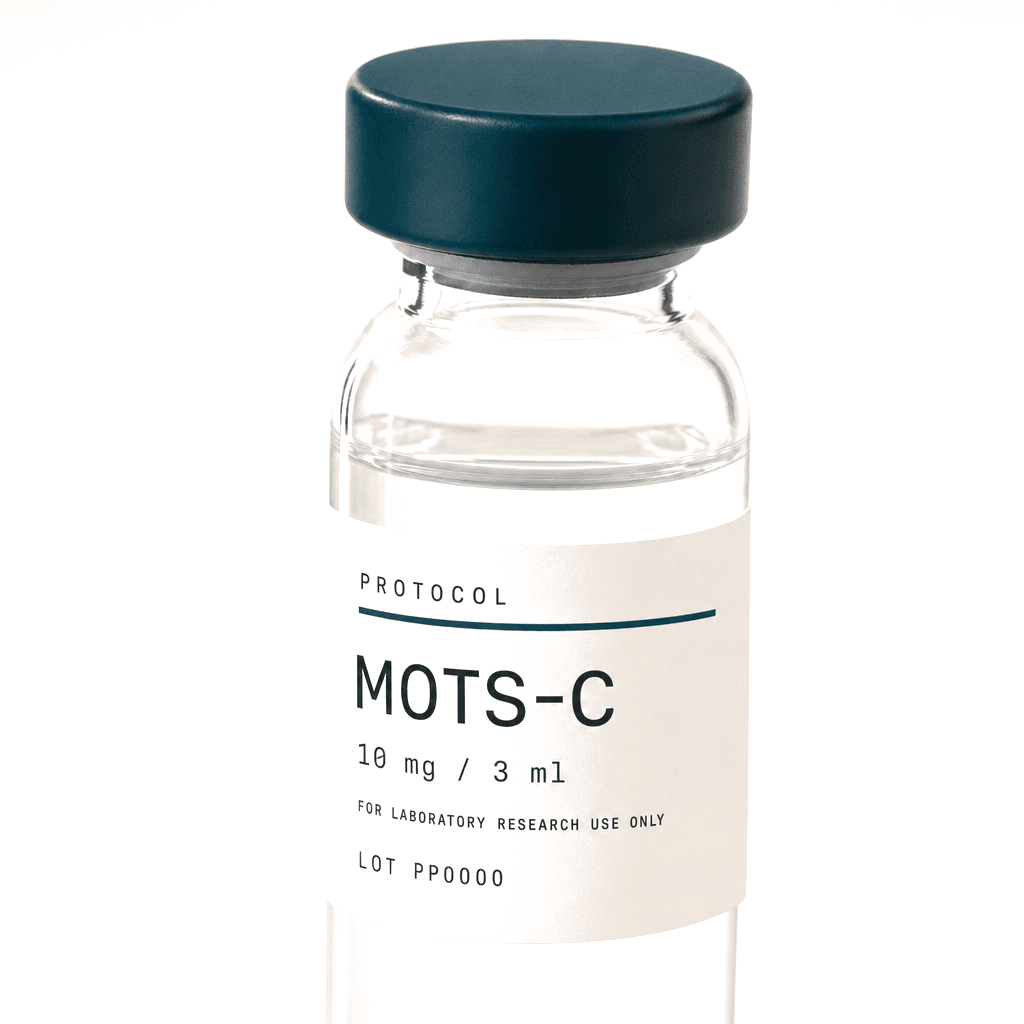
- Molecular weight
- 2174.6 g/mol
- Sequence
- MRWQEMGYIFYPRKLR
- Presentation
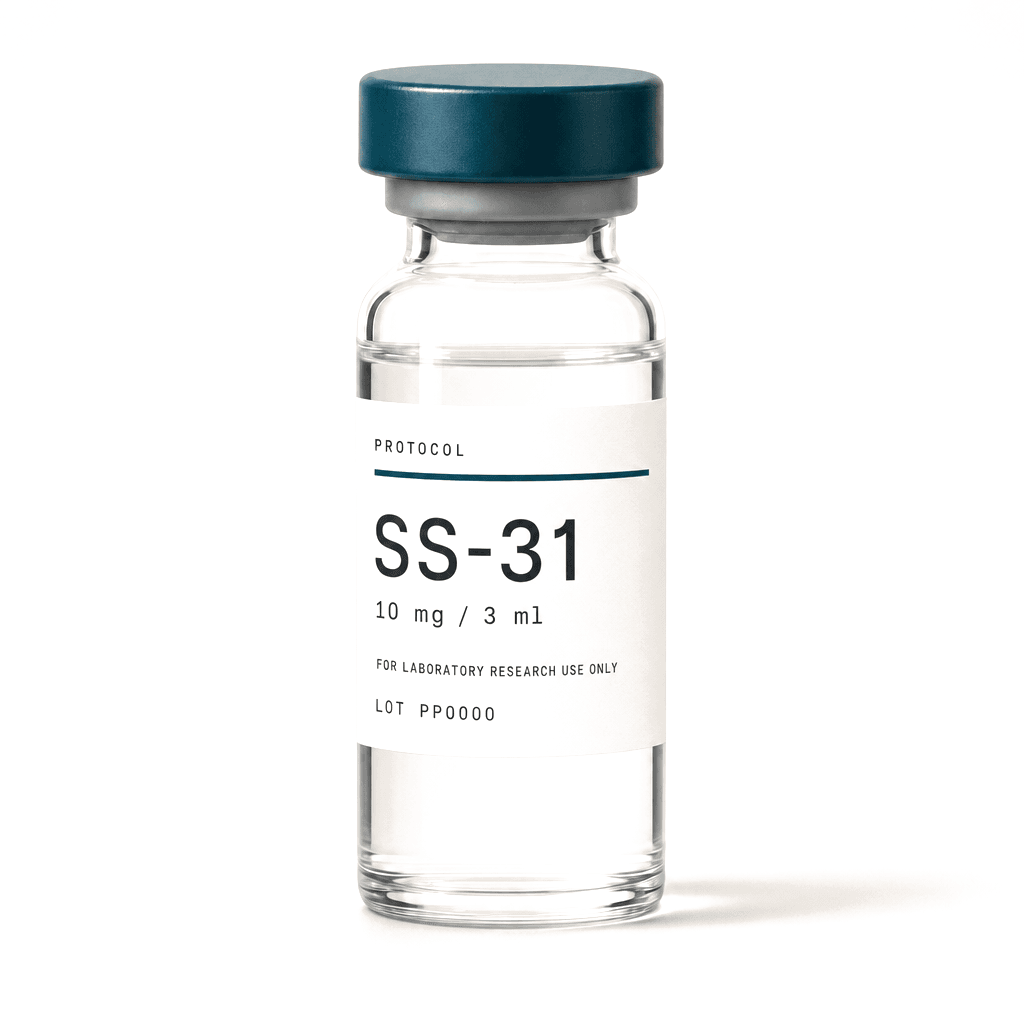
- Sealed 3ml vial
Molecular weight source: PubChem CID 146675088. View the PubChem record
MOTS-c is one of the mitochondrial-derived peptides, a class of short peptides translated from small open reading frames inside mitochondrial DNA rather than the nuclear genome. Its origin is the experimental interest: it places a signalling molecule inside the organelle whose own genome encodes it, which makes it a tractable model for retrograde communication from mitochondrion to nucleus.
The characterised mechanism runs through one-carbon metabolism. MOTS-c interferes with the folate cycle, causing accumulation of 5-aminoimidazole-4-carboxamide ribonucleotide (AICAR), an endogenous AMP mimetic that activates AMP-activated protein kinase. AMPK activation then shifts substrate handling toward glucose uptake and fatty acid oxidation in cell and skeletal muscle preparations, which is why MOTS-c appears in exercise-mimetic and insulin-sensitivity models alongside more conventional AMPK agonists.
A second line of controlled laboratory investigation concerns its localisation. Under metabolic or oxidative stress the peptide translocates from the cytosol to the nucleus, where it associates with stress-responsive transcription factors including NRF2 and ATF1 and modulates antioxidant response element gene expression. Research models also examine the m.1382A>C polymorphism, which alters the peptide sequence and has been used to study genotype-dependent differences in mitochondrial signalling. Endpoints are typically AMPK phosphorylation state, glucose uptake, mitochondrial respiration rate, and ARE-driven transcript levels. No therapeutic, diagnostic, or clinical conclusion is drawn from any study referenced above, and none should be inferred.
MOTS-c is listed in a sealed 3ml vial, at 10mg and 40mg.
When a batch is released, it is independently analysed before it is listed. Purity is measured by high-performance liquid chromatography. Identity is confirmed by mass spectrometry against the expected mass, which matters for a 16-residue sequence where a single-residue deletion shifts the mass by a resolvable amount. Those are the two analytical methods used, and no other method is claimed.
When a batch is released, the lot number on the vial resolves to the public Certificate of Analysis for its batch, including the measured results for that batch. Specimen documents on this site are for demonstration only and are not genuine laboratory reports.
When a batch is released, it is independently analysed by HPLC and mass spectrometry before it is listed, and the Certificate of Analysis for that batch is published in full, including the measured purity figure for that batch.
MOTS-c
MC5607Specimen record. Not a genuine laboratory report.
| PARAMETER | METHOD | RESULT |
|---|---|---|
| Purity | HPLC | 98.1% |
| Identity | Mass spectrometry | Consistent with expected mass |
HPLC
Purity by chromatography
ON RELEASE
MASS SPECTROMETRY
Identity confirmation
ON RELEASE
PUBLIC COA
Each released batch number resolves to its Certificate of Analysis
COMMITTED
Research Use Only
MOTS-c is catalogued strictly for in-vitro laboratory research. It is not for human consumption, veterinary use, or therapeutic, diagnostic or clinical application. It is not supplied as a medicinal product and it is not licensed by the MHRA.
Not a Medical Product
None of the compounds listed on this site are medicinal products, nor should they be marketed, described or used as such. No medical claims are made about MOTS-c. Nothing on this page is medical, veterinary or scientific advice, and no guidance on preparation, administration or quantity is provided or will be provided on request.
Compliance and Responsibility
The research user is responsible for ensuring compliance with all laws and regulations governing the receipt, handling, storage, use and disposal of research chemicals in their jurisdiction, and for applying appropriate control measures under the Control of Substances Hazardous to Health Regulations 2002 or the equivalent local regime.
Analytical Scope
When analytical results are published for MOTS-c, they relate solely to the batch identified on the Certificate of Analysis. Two methods are used: high-performance liquid chromatography and mass spectrometry. No other analysis is performed or implied. Results for one batch do not warrant any other batch. Specimen documents are for demonstration only and are not genuine laboratory reports.
Jurisdiction Notice
MOTS-c cannot be listed to research users in the following jurisdictions: Australia, Canada, Japan, Mexico, New Zealand, Norway, Russian Federation, Saudi Arabia, Singapore, South Korea, Switzerland, United Arab Emirates. It is the research user's responsibility to verify local eligibility before placing an order. Where an order is placed for a jurisdiction in which the compound cannot be listed, the order will be cancelled and refunded in full.
Every released batch has a document.
The Certificate of Analysis for a batch is published when that batch is released. Your batch number then resolves to the report. Specimen documents on this site are for demonstration only.
For laboratory research only. Not for human consumption. No medical claims.